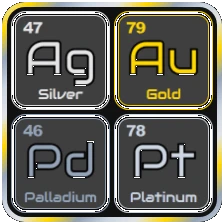
For over a century, precious metal extraction has been a game of billionaires and sovereign nations. It requires massive capital, heavy earth-moving equipment, and deep subterranean blasting. To pull a single ounce of platinum from the earth, mining conglomerates in South Africa and Russia have to excavate, crush, and chemically process roughly ten tons of solid rock. It is a grueling, capital-intensive war against geology. But the underground economy doesn't operate on standard industrial timelines. By the late 2010s, a new breed of "miner" realized that the highest-grade precious metal deposits on earth weren't buried in the Bushveld Igneous Complex, they were bolted to the undercarriage of American vehicles.
Armed with nothing but a $90 battery-powered reciprocating saw and a hydraulic floor jack, the shadow economy birthed the ultimate street arbitrage. It was a bizarre, high-speed twilight zone where a 60-second pit stop yielded a higher hourly wage than a Wall Street hedge fund manager.
The Driveway Origins and the Palladium Spike
The epidemic began in the suburbs. As global supply chains tightened and emission standards grew stricter, the automotive industry was forced to pack exhaust systems with a massive over-concentration of the Platinum Group Metals (PGMs). The initial target of the street miner was the Toyota Prius. Because hybrid engines run colder, their converters required heavy doses of palladium to scrub the exhaust efficiently.
When palladium prices went on an absolute tear (eventually shattering $3,400 a Troy ounce and mathematically surpassing gold), and the street reacted. Disorganized crews began sweeping through residential neighborhoods at 3:00 AM, sliding under driveways to saw off Prius converters that commanded $1,000 in untracked cash at local scrap yards. But like any lucrative financial sector, the amateur hour didn't last long. The underground market matured, and the syndicates realized they were thinking too small.
The Diesel Transition: Hunting the "Rich Man's Gold"
While a Prius converter yielded roughly 3 to 7 grams of palladium, the highly organized theft rings shifted their crosshairs to a much heavier payload: commercial diesel fleets. Diesel engines run highly oxygenated exhaust that requires the specific chemical properties of platinum, which has historically been known as the "Rich Man's Gold."
A standard heavy-duty Diesel Oxidation Catalyst (DOC) and Diesel Particulate Filter (DPF) bolted under a Ford F-250 Super Duty, a commercial box truck, or a school bus isn't just a muffler; it is a highly concentrated chemical refinery. These massive commercial filters can contain anywhere from 10 to 30 grams of platinum. This meant a professional street miner didn't need to hit ten driveways to make a profit. They only needed to breach the chain-link fence of a single commercial fleet yard, slide under three heavy-duty trucks, and walk away with a pure Troy ounce of one of the rarest monetary metals on the periodic table.
Operation Heavy Metal: The $600 Million Syndicate
The macroeconomic inversion of labor and value became terrifyingly clear when the federal government finally stepped in. In late 2022, the Department of Justice unsealed indictments in a nationwide sweep dubbed "Operation Heavy Metal." The sheer scale of the arbitrage proved that this was no longer a petty street crime; it was a highly sophisticated commodities trading operation.
The DOJ targeted a New Jersey-based enterprise known as DG Auto, which acted as the central refinery for regional theft rings operating across five states. The numbers defied standard economics:
- The Vang family operation in Sacramento, California, effectively acted as a regional broker, buying stolen converters from local street thieves and shipping them east, generating over $38 million in illicit revenue.
- DG Auto processed these stolen units, extracted the precious metal powders, and sold them to legitimate metal refineries.
- By the time the feds dismantled the network, the syndicate’s leader admitted to receiving more than $600 million from the resale of the extracted metals.
You weren't paying for the metal's geological extraction; you were paying the risk premium for the 60 seconds of noise, the sparks, and the constant threat of a federal money laundering charge.
2026: The Hydrogen Horizon and the Next Arbitrage
Gravity always wins, and you cannot defy the macroeconomic laws of supply and demand forever. By 2026, the artificial risk premium of the Sawzall Syndicate has been heavily diluted. State legislatures clamped down aggressively, requiring strict VIN-matching, photographic evidence, and ID laws at scrap yards, effectively destroying the liquidity of the street market. The metals are returning to the earth, and the Sawzalls are returning to the toolboxes.
However, the story of platinum is far from over. While the rapid acceleration of the Electric Vehicle (EV) market has fundamentally altered the demand curve for palladium, platinum is quietly positioning itself for a massive resurgence. As the global energy sector pivots toward hydrogen fuel cells (which require significant amounts of platinum to function), the metal is poised to reclaim its throne from gold and silver. For one brief, chaotic window, the most lucrative platinum mining operation in the world was happening at 3:00 AM in a commercial parking lot. But as the hydrogen economy scales, the next great macroeconomic arbitrage is already brewing.